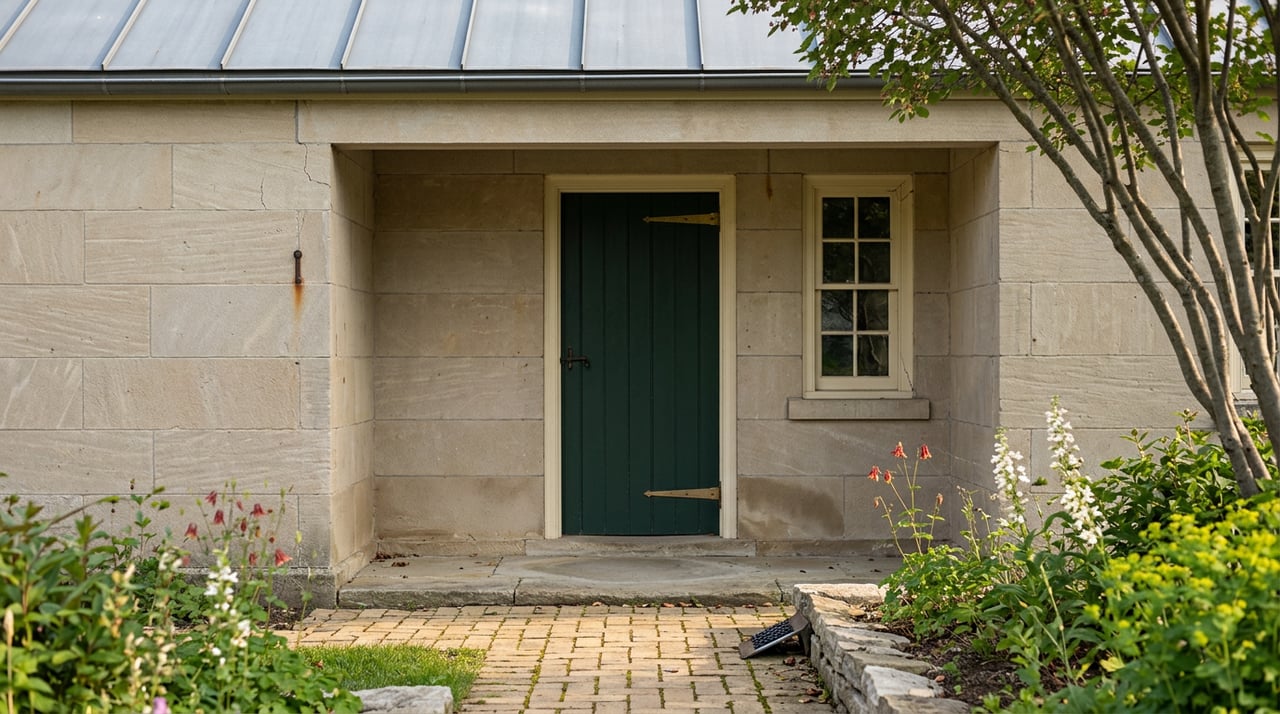
Point Foods IGA closed in 2021 when its owners retired. For the better part of four years after that, anyone living inside Mineral Point's city limits had two real options for groceries: drive north to Dodgeville, or drive south toward Platteville. Meanwhile, downtown kept adding names to the Gallery Night list. A wine bar. A brewery. An ice cream parlor. A coffee shop that survives on its own devoted regulars. By the time Staple & Fancy finally opened at 110 High Street in October 2025, downtown Mineral Point had spent years getting more interesting to visit and no easier to actually live in.
That gap is worth explaining, not just noting.
The Order Things Came Back In
For a town of roughly 2,500 people that pulls visitors in for its Cornish stone architecture and its arts scene, losing the neighborhood grocery store looks, on paper, like it should have been the easiest thing to replace. Instead it was the last. City administrator Matthew Honer has said publicly that a returning grocery store was the single most consistent thing residents asked city hall for during those years, ahead of any other downtown complaint. It still took four years, not because nobody wanted to fix it, but because the people who owned downtown storefronts weren't in the grocery business, and the people in the grocery business weren't looking downtown.
By the time Brian and Kassi Blanchette bought the old medical office building spanning 104 and 110 High Street, the blocks around them had already filled in with the kind of businesses that make a Gallery Night worth showing up for. Cafe 43, Commerce Street Brewery, Eliza's Lounge, Popolo, American Wine Project, The Book Kitchen, Sweet Life Ice Cream Parlor, and Wild Blue Yonder Coffee are all now part of the rotation that stays open late four Saturdays a year. None of them had to solve the problem the Blanchettes did next: keeping the lights on and the shelves full every single day, whether or not anything else downtown was happening that night.
A Grocery Store Runs On A Different Clock
Set side by side, the difference in what these businesses are actually betting on becomes obvious.
| Business type | What it's built around | How often the bet has to pay off |
|---|---|---|
| Gallery Night circuit (Cafe 43, Commerce Street Brewery, American Wine Project, and the rest) | Four scheduled Saturdays in 2026: April 4, June 6, August 1, and December 5 | Four nights a year |
| Pendarvis | Its 2026 season, running May 28 through October 11 | Thursday through Sunday, about 20 weeks |
| Staple & Fancy | The daily grocery run | Every day, all year, including a random Tuesday in February |
A shop riding Gallery Night traffic needs four good nights a year to make sense. Pendarvis needs a solid spring-through-fall run, and even then it only opens four days a week. A grocery store has to justify itself on the days nothing else downtown is drawing anyone in at all. That is a much harder number to hit, and it explains why a wine bar or a brewery could open into that gap years before anyone was willing to open a grocery store into it.
Kassi Blanchette said as much when she talked about why she and Brian picked High Street over a more conventional retail site:
"If we wanted some brand-new box store, we would have just purchased a lot out on the highway."
They didn't. They bet on foot traffic that, outside of four Saturdays a year and a five-month museum season, mostly didn't exist yet.
What Actually Sits On The Shelves
Staple & Fancy runs about 3,800 square feet out of the renovated building, stocked with produce, locally raised meats, organic jams, and pantry staples sourced from roughly 35 local producers, according to reporting in In Business Madison. A small commercial kitchen in back turns out sourdough, focaccia, roasted chicken, and a rotating soup menu, along with grab-and-go deli items, so the store is doing double duty as both a market and a source of actual dinner on a weeknight. The renovation itself came with help from the Wisconsin Economic Development Corporation, which awarded a $250,000 Community Development Investment grant toward retaining the building's historic facade while converting the ground floor to retail and adding six residential units above it.
None of that is dramatic on its own. What makes it worth paying attention to is what it replaced: four years of driving out of town for something that used to be a two-minute walk.
What Changes On Your Calendar Now
For four years, the question of what's worth doing downtown was really a quarterly or seasonal one. That is still mostly true, but it's no longer the whole story. Here's what the rest of 2026 looks like:
- Pendarvis remains open Thursday through Sunday, 10 a.m. to 4 p.m., through October 11, closing out its 2026 season.
- The Fall Art Tour runs October 16 through 18, pulling galleries and studios back into the spotlight the weekend after Pendarvis locks up for the year.
- The next Gallery Night lands on December 5, the last of the year's four dates.
- Staple & Fancy is open daily in between all of it, with no season to wait out.
That last point is the actual shift. Picture a random Wednesday in the first half of November this year, after Pendarvis has closed for the season and well before the December Gallery Night. For four years, that would have been a quiet stretch downtown in every sense, including the practical one. Now it isn't. Staple & Fancy is the business that's counting on you to show up on exactly that kind of day, not the big weekend everyone circles on the calendar.
The Momentum Didn't Stop At Groceries
Staple & Fancy wasn't an isolated fix. Spectrum News 1 reported that several other new businesses opened downtown in the year before the grocery store did, part of a broader push residents and the city have described as a deliberate effort to bring more investment back to Main Street rather than the highway corridor. The grocery store is the piece that took longest to land, but it landed inside a downtown that was already adding storefronts, not one that suddenly turned around because of it.
That's the real lesson in the four-year gap. A downtown can get more interesting, more photogenic, and more written-up in arts calendars, and still be missing the one business that has to work on the boring days too. Culture fills in fast because the economics are forgiving: four nights a year, or a five-month season, can carry a gallery or a wine bar. A grocery store has no such cushion. It either works every day or it doesn't work at all, and that's exactly why it was the last thing back, not the first.
If you're already living in this stretch of Iowa County and keeping an eye on how Mineral Point, Dodgeville, and the surrounding towns keep changing, that kind of detail tends to matter more than the postcard version of the story. Brandon Wikman & Joe Nawrot spend their time in these small downtowns and the farmland around them for exactly that reason, and if you're ever curious what any of it means for a property you own or one you've had your eye on nearby, that's a conversation worth having with people who are already paying attention.