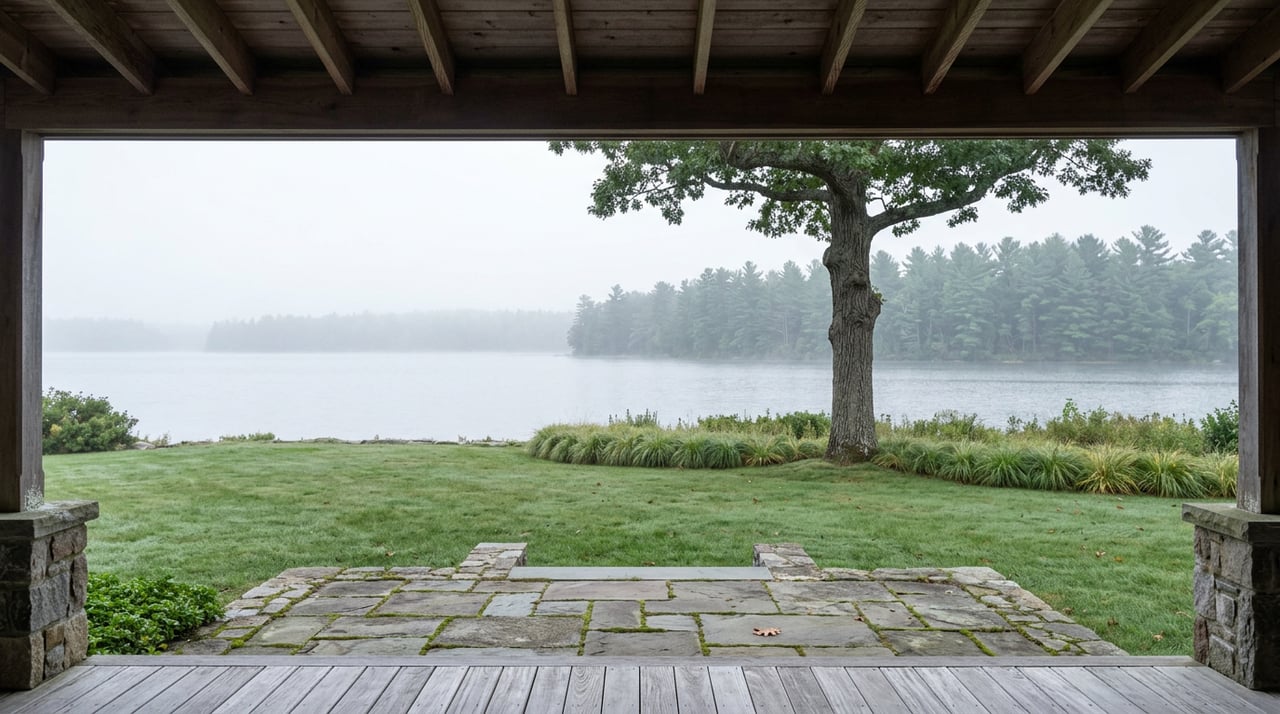
Every regular on Buffalo Lake has the same explanation ready before you even ask: it's shallow, so of course it gets weedy and murky by August. Eight feet at its deepest point, ten-plus miles of water that's barely a third of a mile wide in most stretches. Boats push through mats of vegetation near Packwaukee. The water off the Montello Dam turns the color of weak coffee by late July. Everyone treats this as physics. Shallow lake, warm water, weeds, done.
The Buffalo Lake Protection & Rehabilitation District's own testing, gathered through 2025 and shared with members in its January 2026 newsletter, tells a different story, and it's one most people on the lake haven't seen yet.
The number that doesn't fit the shallow-lake theory
The district's Water Quality Committee spent 2025 sampling phosphorus at two points along the Fox River as it feeds into Buffalo Lake, plus five creeks that drain into the system. What they found wasn't just that phosphorus was high. It was where the increase happened.
| Testing location | Phosphorus reading | State standard |
|---|---|---|
| County Rd O (upstream) | 0.243 mg/L | 0.075 mg/L (streams) |
| Hwy 22 in Montello (near the dam) | 0.460 mg/L | 0.1 mg/L (large rivers) |
The water was already more than three times over the state's stream standard before it ever reached Buffalo Lake. By the time it got to the dam, the reading had nearly doubled again. That second jump is the part a shallow-lake explanation can't account for. If the lake were simply passing through water that arrived dirty, the number at the dam should look roughly like the number upstream, maybe a little worse from evaporation and concentration. Instead it almost doubled, which points to something happening inside the lake basin itself, not just upstream of it.
Buffalo Lake Protection & Rehabilitation District chair Dustin Esselman put the plain version of this in the district's January newsletter, asking members directly whether they were alarmed by what the testing showed. The honest answer for most lake residents is probably that they didn't know there was a specific number to be alarmed about at all.
Where the second half of the problem comes from
Phosphorus feeds weed growth, and decaying weeds pull oxygen out of the water. That's the mechanism behind the fish kills the lake has seen before, including one the Wisconsin DNR investigated in 2024 across the broader Buffalo Lake watershed that stretches into Green Lake and Columbia counties as well. Low oxygen from decomposing plant matter is a documented cause of exactly that kind of die-off.
The upstream phosphorus load is largely an agricultural and land-use story playing out well outside anyone's yard on the lake itself. But the doubling between County Rd O and the dam happens in the stretch where the shoreline is lined with cabins, seasonal homes, and lawns that run right down to the water. The district's own guidance to members points at two specific and correctable habits: fertilizing lawns that drain straight into the lake when it rains, and mowing grass all the way to the shoreline instead of leaving a buffer strip that would slow runoff before it reaches the water. Neither of those is a dramatic fix. Both are things a homeowner controls directly, which is a different proposition than waiting on farm practices two townships upstream to change.
What the grade actually says, and what it leaves out
LakeQuality.org's assessment, built on a September 2025 sampling and last updated in 2026, puts a letter on all of this: Grade D, nutrient-rich, water clarity under two and a half feet, and a Trophic State Index of 69, which lands the lake solidly in eutrophic territory. Of the lakes monitored in Marquette County, Buffalo Lake ranks eleventh out of eleven for water quality.
That grade is useful context, but it measures the lake as a whole, sampled well downstream of where the district's own creek testing happened. It doesn't show the doubling between upstream and the dam, because it isn't built to. The district's granular testing is the piece that explains why the grade looks the way it does, not just that it does.
The fish stocking, the harvesting hotline, and a permit almost nobody noticed
None of this is being left to fix itself. The district's fish stocking, planned for this past May and funded by more than $24,000 donated by area businesses and individuals over the two years leading up to it, is the kind of effort members are asked to support directly, writing "Fish Stocking" in the memo line when they give. Sean Larscheidt joined the district's board earlier this year to help carry that work forward.
Weed control runs through a separate Harvesting Committee, which operates its own hotline for residents with concerns or complaints about the cutting schedule. That the lake needs a standing committee just for harvesting, on top of a Water Quality Committee running its own testing program, says something about the scale of the maintenance this water requires every season.
The quieter development is administrative. In March 2026, the Wisconsin DNR finished reviewing an application the district had filed for a revised summer water level order on Buffalo Lake, filed under permit number IP-NE-2022-39-00230. The district's own Lake Level Committee, which had spent years gathering public input and coordinating with engineers and state agencies to get that order across the finish line, dissolved shortly after, on the reasoning that the job it existed to do was done and the remaining authority now sits entirely with the state. It's a small governance footnote, but it means the summer water levels on Buffalo Lake now run under a different set of rules than they did a few years ago, decided through a process most people on the lake never had reason to follow closely.
The DNR's own lake page, separately, lists two distinct contacts for Buffalo Lake: the Buffalo Lake Improvement Association and the Buffalo Lake Protection & Rehabilitation District. Two organized groups paying attention to one lake is not typical, and it's a fair signal of how much local energy is already going into this water before any of it shows up in a headline.
What this means if you're on the lake this summer
The practical takeaway isn't that Buffalo Lake is in crisis. It's that the murk and the weeds aren't simply the lake being what it's always been. They're the visible result of a measurable, two-stage problem, part of it arriving from outside the district's control and part of it compounding locally in ways individual shoreline owners can actually influence.
If you own shoreline property here, the two changes the district is asking for cost nothing and take an afternoon: skip the lawn fertilizer, and let a strip of taller grass grow along the water's edge instead of mowing to the shoreline. If you fish the lake, this year's stocking effort is worth understanding because it ran on community fundraising rather than a routine state schedule, which means the fishery you cast into this fall was built one donation at a time. And if you've got a complaint about where or when the harvester has been cutting weeds near your dock, the Harvesting Committee's hotline exists specifically so that conversation happens with the people running the program instead of just circulating at the boat landing.
The lake isn't going to test clean overnight. But for the first time, the numbers explaining why it looks the way it does are public, specific, and tied to a location on the map rather than a shrug about depth.
If you're weighing what a summer on Buffalo Lake, or any of the recreational water in Marquette County, actually looks like day to day, Brandon Wikman and Joe Nawrot spend their time in these communities and can walk you through what a specific property's access, shoreline, and lake conditions really mean before you make a decision. Contact Us.